The 10-dollar product featuring "Tesla Sentinel Mode" sold a whopping $130,000 on TikTok within just
Most Tesla owners are familiar with the "Sentinel Mode". As soon as the car is parked and the doors are locked, the external cameras and sensors automatically enter monitoring mode.
If any suspicious activity is detected, the central control screen will light up "Recording", accompanied by a red camera icon, directly informing the other party: I'm recording.
If someone really does make a move, the alarm will go off, the car owner's mobile phone will receive a reminder, and the video footage before the incident can also be retrieved afterwards.
But the problem is that it belongs only to Tesla.
If other car owners also want a sense of security that "my car is being monitored", they usually have to install additional equipment.
The demand of American car owners for car theft prevention may be stronger than many cross-border sellers imagine.
According to data released by the Insurance Crime Bureau (NICB) of the United States in March this year, a total of 659,880 vehicles were stolen in the United States in 2025, a year-on-year decrease of 23%.
Although the figures are declining, on average, more than 75 vehicles are still stolen every hour.
Not to mention cases such as smashing car windows, stealing tires, and removing car lights, which are not fully included in the "vehicle theft" statistics.
As a result, a batch of relatively inexpensive and effective car anti-theft gadgets began to find opportunities on the TikTok US platform.
Creatok observed that a "fake car alarm light" priced at approximately $10 has recently suddenly gained popularity on Echotik.
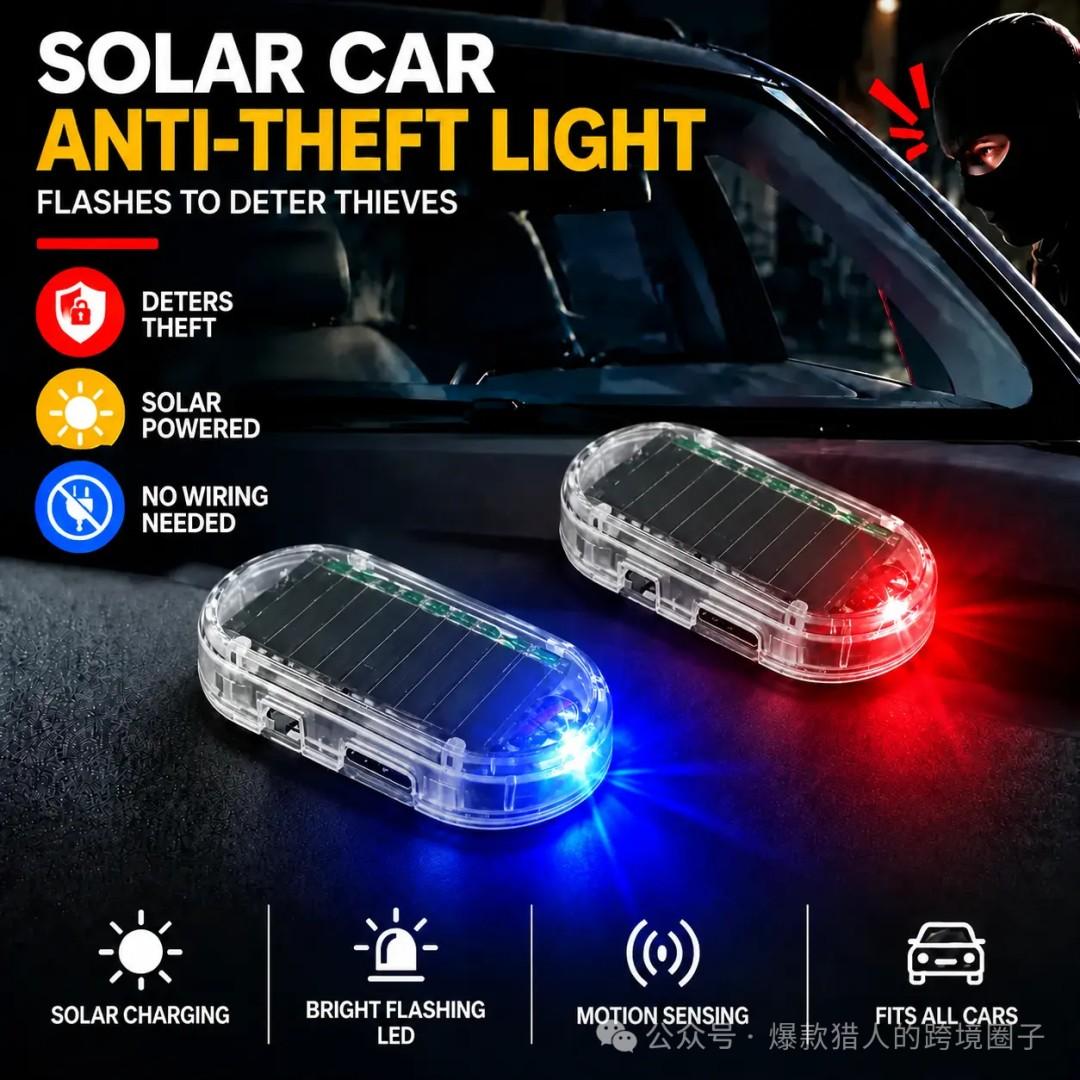
This product is called "Simulated Car Alarm Light". It was put on the market 8 days ago and sold 9,577 units, with a GMV of 130,000 US dollars. The price is only around 10 US dollars.
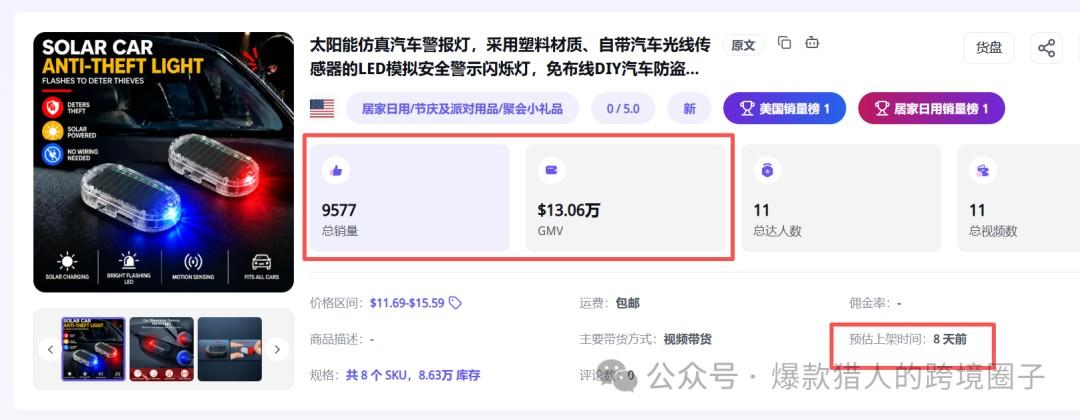
However, if you take the product apart, you'll find that its structure is actually quite simple.
It cannot give an alarm, nor can it record videos, nor can it connect to the internet to notify the owner.
If someone actually stole the car, it wouldn't even know what had happened...
In fact, all it does is make others think that this car is not to be trifled with.
After being powered on, the red and blue lights keep flashing, looking somewhat like police lights and easily reminding people of Tesla's Sentinel mode.
For opportunistic thieves, this visual signal might be a clear enough "don't touch it".
The product itself also sets the usage threshold very low.
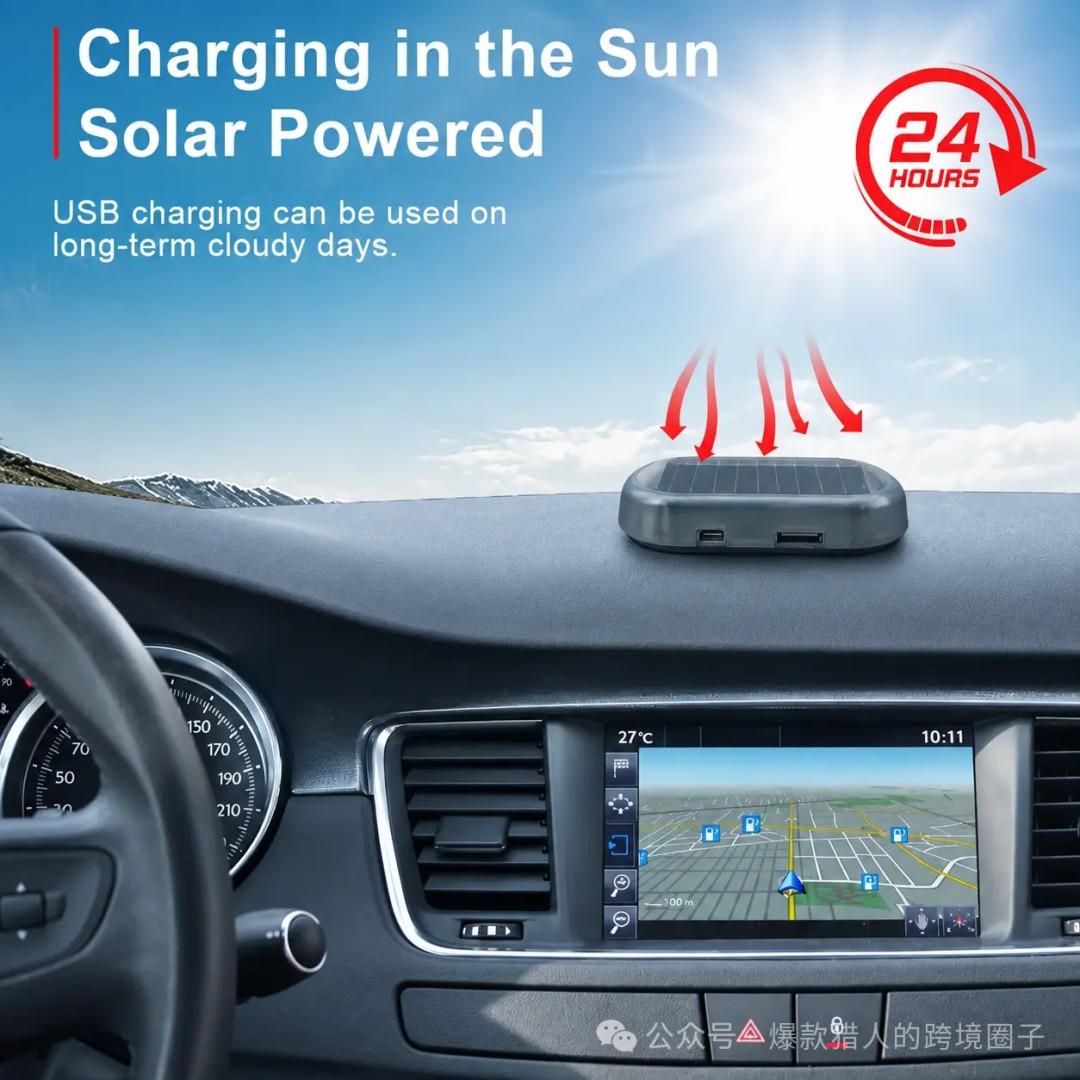
It is equipped with a built-in solar panel, which automatically charges during the day. The light sensor module is responsible for activating it after dark. There is adhesive on the back, allowing it to be directly attached to the center console, dashboard or rearview mirror area.
Even the seller has provided a "fake power cord" for it, further enhancing the realism.
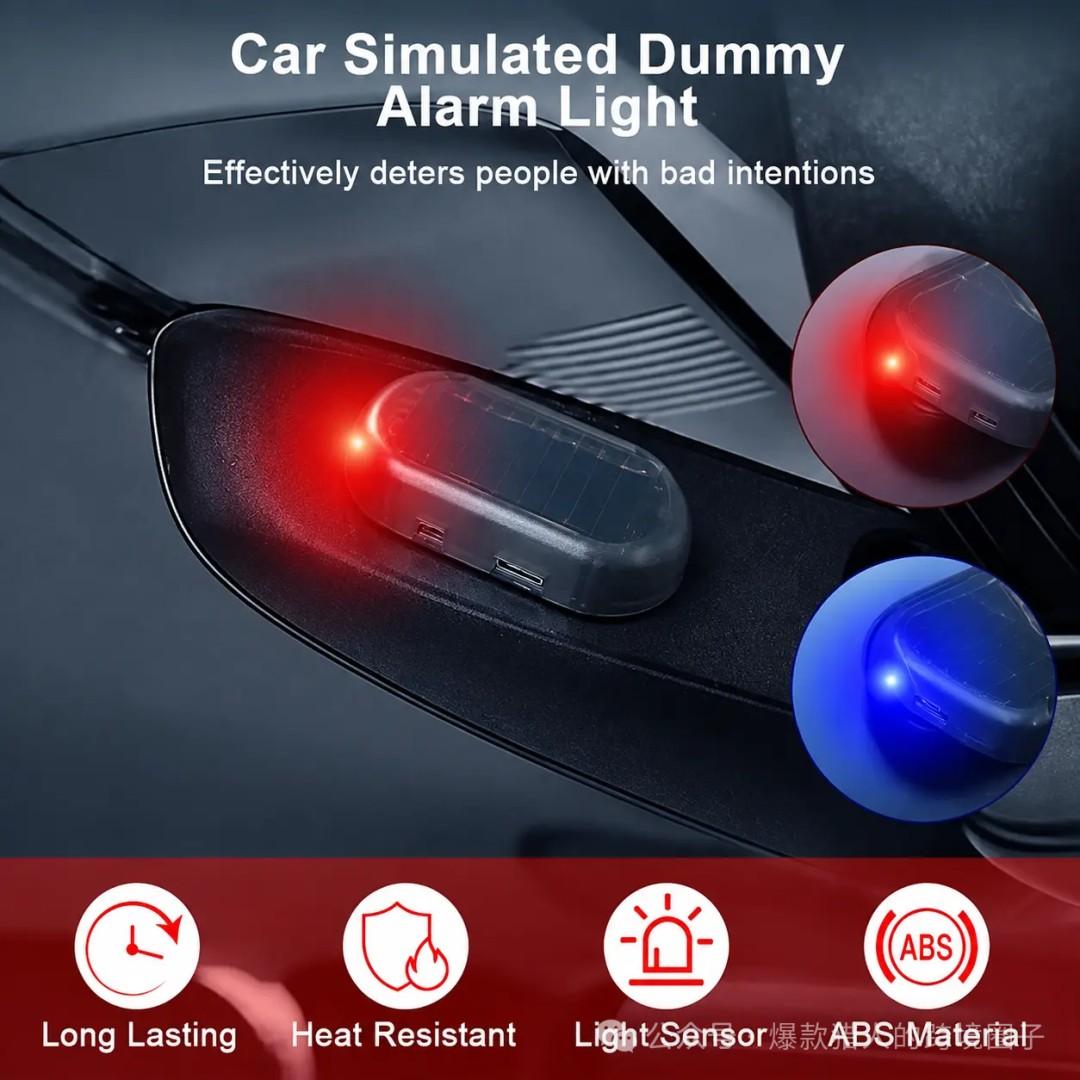
To put it simply, what consumers pay $10 for is not a genuine car security system, but rather a very intuitive psychological suggestion: At least from the outside, this car seems to have security equipment installed.
This is also the reason why it is easily accepted by consumers.
Compared to installing a complete set of car security equipment, $10 has almost no decision-making cost.
For those car owners who just want to add a little "deterrence" to their beloved car, it's not difficult to buy one for a try. After all, the price is not expensive.
And the key point of this product is actually not the parameters. It's the fact that you can understand it at a glance.
The real difficulty in selling these products lies in the fact that consumers often ask:
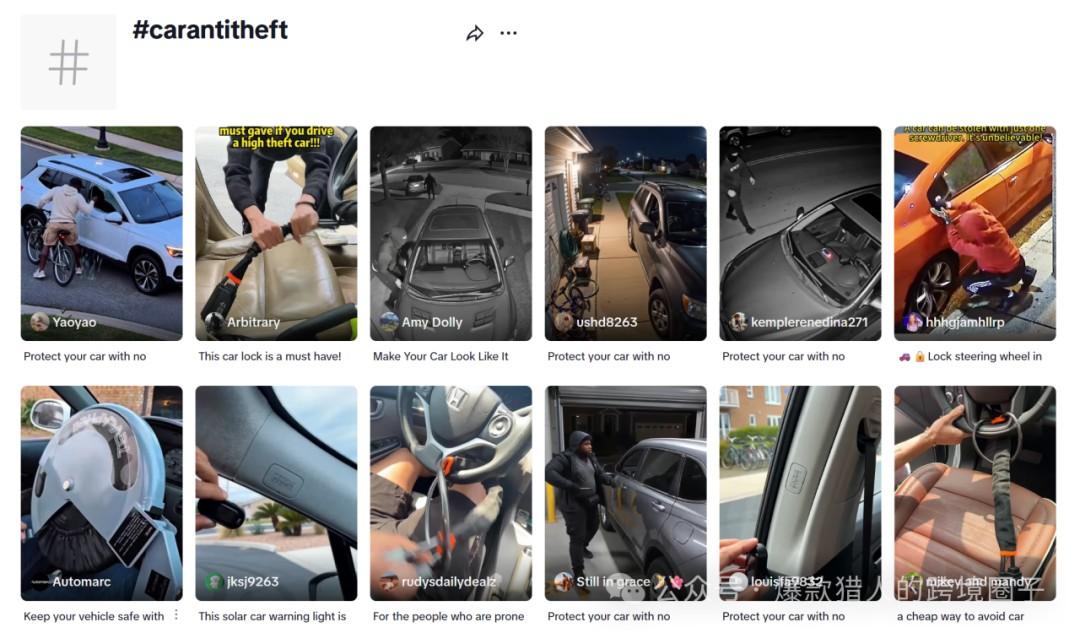
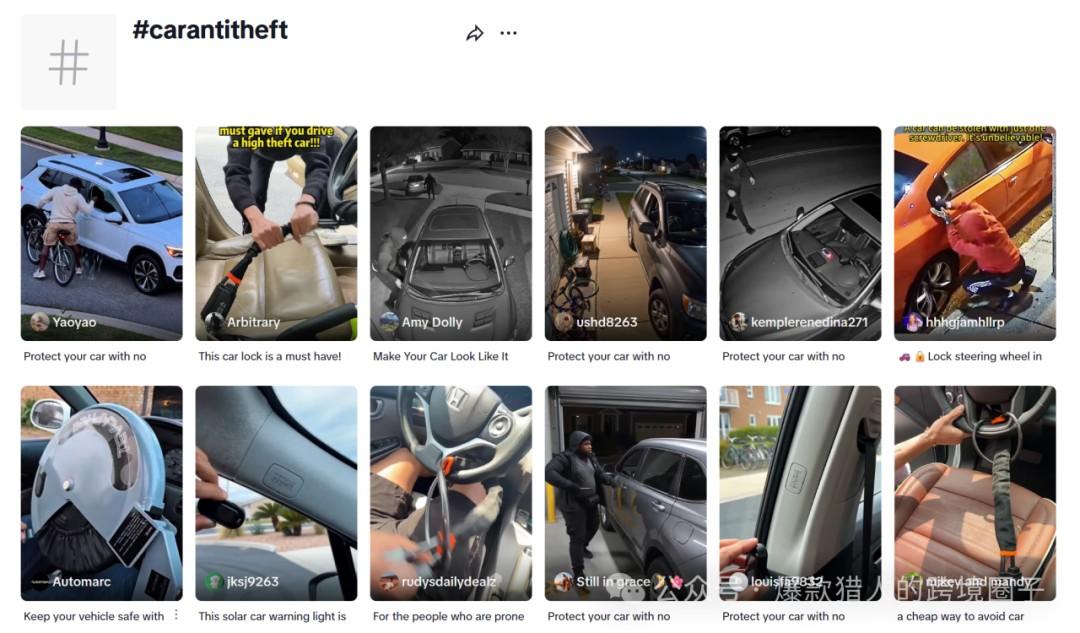
Under hashtags such as #cartheftprevention, #carsecurity, and #antitheft, American car owners have been sharing various anti-theft methods for a long time: putting warning stickers on the car, marking the tires.
This $10 small light merely happened to fit into this existing content scenario.
It didn't create demand out of thin air; instead, it added a new element that is easy to showcase to the already existing "anti-theft car" discussions.
There is another notable aspect of this case: The product is simple, but the content is not.
For the same product, one can shoot "a thief running away", or "parking lot surveillance", "the car owner parking at night", "a neighbor reminding", or even continue to create various contrast scenarios.
For sellers, what is truly valuable is not a single爆款video, but whether they can quickly break down a selling point into dozens of different contents.
Real-life shooting can certainly be done, but shooting, finding actors, setting up scenes, and re-editing all require time.
The advantage of AI materials lies here.
Once a script is determined, it can quickly change characters, scenes, and actions, and continuously test which version is more likely to gain views and conversions.
This is why material production capacity is becoming a basic ability for cross-border sellers.
For the same product, some people can only create a few materials in a day, while others can test dozens of versions in a day.
When the peak point has not been discovered yet, the latter clearly has more room for trial and error.
And the recently launched function of Creatok just solves a very practical problem in AI image generation.
Image 3.
This car alarm light is not a complex product in itself.
However, it addresses a very specific scenario: American car owners want to add a bit of security to their vehicles.
As a result, a product with low cost, obvious visual effects, and easily understandable by consumers has the opportunity to be magnified in TikTok content.
Looking one step further, the opportunities for such products are not only limited to car theft prevention.
Many cross-border best-selling products share similar characteristics:
The problem they solve may not be complex, but the usage scenarios must be specific, and the product effect should be easily visible at a glance.
And on the content side, AI has further lowered the threshold for "quickly creating a large amount of materials".
The product is responsible for creating the selling points, while the content is responsible for magnifying the selling points.
This is what Creatok aims to solve - allowing sellers to quickly turn a good product into a batch of content that can actually be tested after selecting it.
The next best-selling product may not be hard to find. The challenge lies in whether you have enough materials to verify it.
