PodBloom Produce Cleaner Review: Gimmick Or Real‑Food‑Safety Tool? Brutal Hands‑On Test
If you spend time scrolling TikTok or Facebook kitchen‑gadget ads, you must have run into PodBloom Produce Cleaner. This compact, rechargeable submersible gadget markets itself as a simple solution to strip pesticide residues, dirt, wax and contaminants off fruits, vegetables, seafood and meat.
The promotional clips look persuasive: you drop this small pod into a bowl of tap‑water with your groceries, run the cycle, and the water turns murky brown‑yellow. Advertisers frame this discoloration as visible proof that harmful gunk is being pulled out of your food.
As a home cook and parent, I was curious whether this viral gadget delivered real‑world value. I already tested the near‑identical PurePod unit previously, so I knew exactly what observations to watch for. I ordered the PodBloom unit and ran controlled kitchen tests at home. This review shares my full unbiased findings, pricing red flags, the famous cloudy‑water trick, comparisons to PurePod, and practical household alternatives.
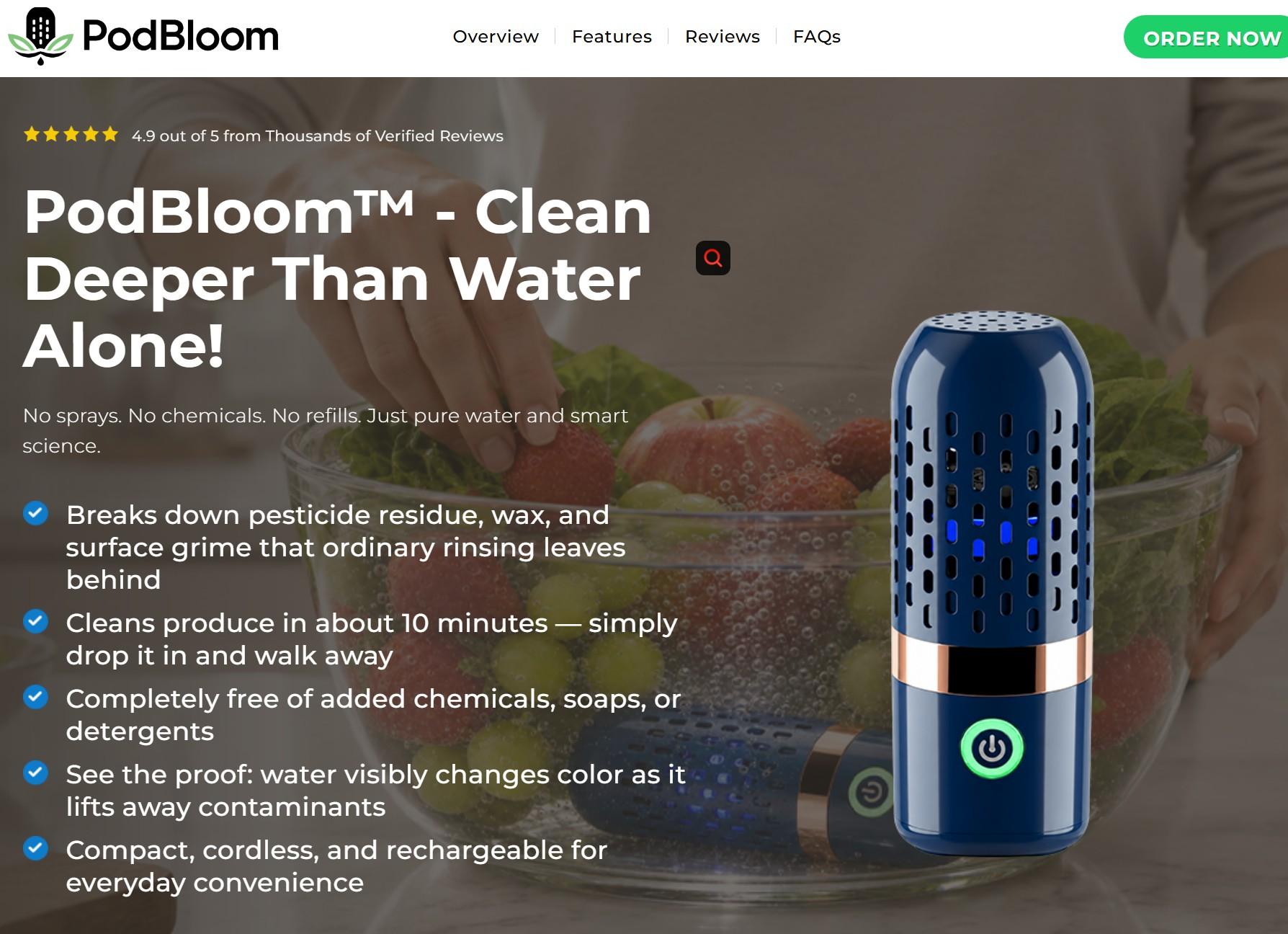
What Exactly Is PodBloom Produce Cleaner?
PodBloom is a small, battery‑powered, fully‑submersible kitchen gadget. It runs on electrolysis / OH‑ion water‑purification technology. The brand says you only need ordinary tap water — no soap, detergent, or replacement cartridges required.
Usage steps according to official instructions:
Fill sink or mixing bowl with tap‑water.
Submerge PodBloom together with fruits, veggies, seafood or meat.
Start the full cleaning cycle.
Take food out and thoroughly rinse under running water before eating or cooking.
The core marketing hook comes from visual feedback: bubbles form and water becomes dark and cloudy. Advertisements tell viewers this murky colour is contaminants being drawn out of your groceries. For busy parents hoping to make family meals safer with minimal effort, this sales pitch is extremely persuasive.
My Controlled Hands‑On Kitchen Test
My first real test used fresh strawberries, a very common household fruit that is notoriously hard to clean thoroughly. I filled a mixing bowl with tap‑water, added strawberries, fully submerged PodBloom and started its cleaning program.
Shortly after power‑on, the unit began bubbling vigorously. Just like in social‑media promotional videos, the water gradually turned murky yellow‑brown. At first glance, it looked impressive. However, when I pulled out the strawberries for inspection, I could observe zero real improvement. They looked no cleaner than strawberries soaked in ordinary tap‑water without the gadget.
That inspired my most important control experiment.
I filled a brand‑new clean bowl with fresh tap‑water and turned PodBloom on, with absolutely no fruit, vegetable, or food item of any kind placed in the water.
The pod still bubbled heavily. The water still shifted to that same cloudy yellow‑brown colour, matching what I saw during the strawberry test.
This control test completely invalidates PodBloom’s main marketing argument. The discoloured water does not come from dirt or pesticides leaching out of your produce. The colour change is a chemical reaction originating inside the gadget itself, regardless of whether food is present in the bowl.
PodBloom vs PurePod: Are They Basically The Same Gadget?
After completing my testing, the similarities between PodBloom and the older PurePod are impossible to miss.
Near‑identical physical outer shell and form‑factor
Identical OH‑ion electrolysis working principle
Exact‑same advertising strategy that leans heavily on dramatic “dirty‑water” demo footage
PurePod accumulated large numbers of negative consumer reviews in past years. Many buyers pointed out exactly this same visual gimmick: water gets cloudy even with no food inside the container.
There is no public paperwork confirming both devices share the same legal operating company. But the hardware design, marketing scripts and consumer‑complaint patterns are highly comparable. Simply renaming the gadget does not resolve its core performance limitations.
Pros of PodBloom Produce Cleaner
✅ Compact and lightweight; easy to store inside kitchen drawers ✅ Rechargeable built‑in battery; no constant disposable‑battery purchases ✅ No ongoing costs for soap, liquid cleaner or replacement cartridges ✅ Simple one‑button operation; easy for most family‑members to run ✅ Works on many different kinds of food: fruit, vegetable, seafood and meat as per branding
Cons & Critical Red Flags
❌ Famous cloudy‑water visual effect happens without any food present; it is a marketing trick, not proof of cleaning performance ❌ Controlled home testing showed no tangible real‑world benefit for removing dirt or pesticide residues ❌ Massive price markup on official brand‑websites. Identical hardware available on Amazon for far lower cost ❌ You are still required to manually rinse your produce after finishing the cycle; it adds an extra kitchen step instead of saving labour ❌ Social‑media advertising heavily relies on misleading demo footage that misinterprets water discoloration as proof of cleaning power
Marketing Claims Versus Real‑World Test Results
| Marketing Claim | Hands‑On Test Verdict |
|---|---|
| Draw out pesticides, wax and contaminants from produce | No visible real‑world evidence from my home testing. Cloudy‑water effect occurs without food. |
| Murky brown‑yellow water proves impurities are pulled out of groceries | ❌ Debunked by blank‑water control test. Colour‑change comes from device‑internal chemical reactions. |
| No soap or chemicals needed | ✅ True. Only tap‑water is required for operation. |
| Convenient labour‑saving kitchen upgrade | ⚠️ Partially true for operation, but you must still manually rinse all food afterwards. |
| Official‑site “70% off limited‑time discount” | ❌ Misleading marketing. Same hardware sells at much lower baseline price on third‑party marketplaces. |
Better Practical Alternatives For Washing Produce
Instead of paying premium price for gadgets built around visual gimmicks, choose these proven food‑safety solutions for your household:
Originally Yellow Mineral‑Based Fruit & Veggie WashThis USA‑made, fragrance‑free mineral cleaning powder is available on Amazon for $19. Soak your fruits and vegetables for around 15 minutes. It helps lift surface pesticides and shop‑handling residues, leaves no odd after‑taste, and can extend the shelf‑life of fresh produce. I tend to wash all groceries immediately after supermarket shopping.
Plain running tap‑water rinsingZero‑cost, well‑established food‑safety method. Thorough rinsing under cold running tap‑water remains highly‑effective for most everyday household fruits and vegetables.
Frequently Asked Questions
Q: Does PodBloom really remove pesticides from fruit and vegetables?
A: In my home controlled testing, I observed no tangible proof it removes pesticide residues. The most persuasive visual cue (cloudy water) occurs even with zero food inside the bowl. No independent third‑party lab test results for this exact device are publicly shared by the brand.
Q: Is PodBloom just a re‑branded PurePod?
A: The hardware design, operating principle and advertising playbook are nearly identical. Public corporate documentation linking the two products has not been released. Consumer complaints follow the exact same pattern.
Q: Why is there such a huge price gap between official websites and Amazon?
A: Official sites use fake “70% off” discount marketing to make $59 pricing feel like a bargain. Physically identical gadgets are listed on Amazon for around $24, without the inflated original‑price trick. Always cross‑check prices before you purchase.
Q: Do I still need to rinse my food after I use PodBloom?
A: Yes. Official instructions state you must rinse produce under running water after completing the cleaning cycle. It will not replace regular rinsing steps.
Q: Is PodBloom a scam?
A: You will receive the physical rechargeable gadget you order, so it is not an outright scam. But its core persuasive marketing visual is misleading, and it is sold at heavily marked‑up pricing on official brand stores. Treat its promotional claims with strong scepticism.
Final Verdict
PodBloom is a compact, rechargeable submersible kitchen gadget built around electrolysis water‑treatment technology. On paper, soap‑free, cartridge‑free operation sounds attractive for families concerned about food safety.
Unfortunately its most convincing sales feature — the dramatic murky‑brown‑water visual — is proven to happen even when there is no food in the bowl. That means you cannot trust cloudy‑looking water as evidence your groceries are being purified.
Identical hardware can be purchased for far less money on marketplaces such as Amazon. Or you can pick trusted mineral‑based produce‑wash options, or simply rely on thorough tap‑water rinsing.
For my household, PodBloom offers no meaningful real‑world food‑safety improvement. I will not repurchase and I cannot recommend it.
My Independent Rating: 1.5 / 5 Stars
Disclaimer: This article reflects my home‑based hands‑on testing. It is not professional laboratory food‑safety analysis, nor medical advice. Always follow official food‑washing guidance for your region.