Lenaro Bee Venom Mole & Wart Treatment Cream Review: Is It a Scam?
Moles, skin tags and warts are extremely common skin concerns that lead many people to search for at-home removal solutions. In recent years, products like the Lenaro Bee Venom Mole and Wart Treatment Cream have been heavily promoted online as a painless, scar-free, natural way to eliminate skin growths at home.
Marketed as a dermatologist-developed formula made in US-based NIH-registered labs, the product promises to shed moles, warts and skin tags in as little as 3 days, while leaving no scars and brightening uneven skin tone.
In this independent review, we break down its advertised claims, ingredient profile, scientific evidence, regulatory warnings and common customer complaints to help you determine whether it is a legitimate solution or a deceptive scam.
What Is Lenaro Bee Venom Mole & Wart Treatment Cream?
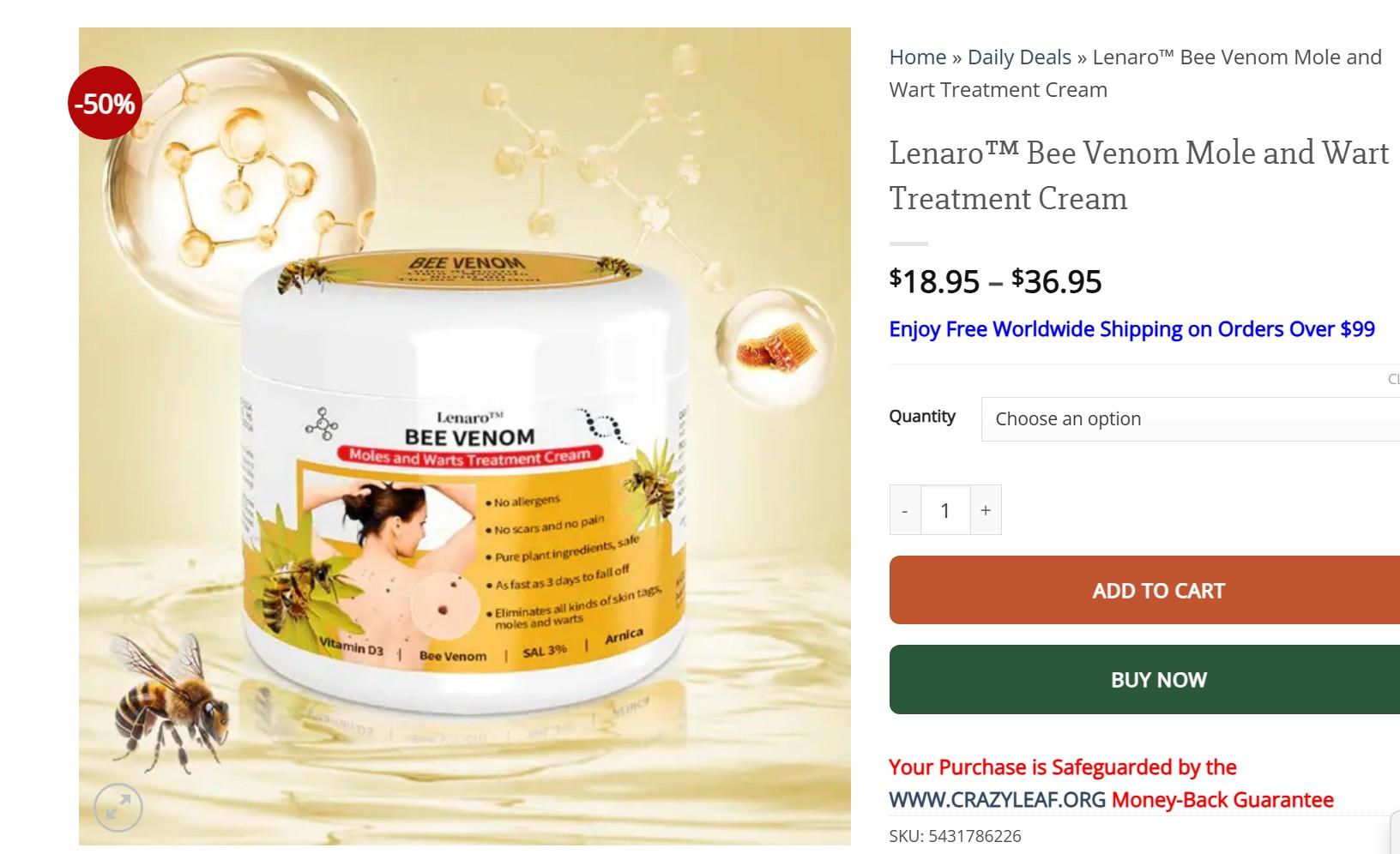
Lenaro Bee Venom Mole and Wart Treatment Cream is an over-the-counter topical ointment sold across multiple independent e-commerce sites including beebea.com, ny.molooco.com and trendifendi.com, and promoted widely via YouTube, Facebook and social media ads.
Advertised product claims
The brand markets the cream with a long list of benefits and credentials:
Removes all types of moles, warts and skin tags naturally
Painless and scar-free removal
All-natural, safe formula
Results in as fast as 3 days
Brightens uneven skin tone and promotes new skin regeneration
Developed by a team of dermatobiologists
Manufactured in the USA in NIH-registered laboratories
Dermatologist recommended
Cruelty-free
30-day money-back guarantee
Priced from $16.06 to $57.86 depending on bundle size, the product is typically advertised with steep limited-time discounts and low-stock urgency tactics such as “Only 956 items left”.
Claims vs. Scientific Evidence: Does Bee Venom Remove Moles?
The core selling point of the product is bee venom as an active removal ingredient. To evaluate the claim, we looked at available clinical and scientific research.
Bee venom therapy has been studied for certain conditions including bee sting allergy desensitization, osteoarthritis, multiple sclerosis and nerve pain. However, there is no credible, peer-reviewed scientific evidence supporting the use of bee venom for removing moles, warts or skin tags.
Moles are formed by pigment-producing melanocytes, and warts are caused by human papillomavirus (HPV) leading to excess keratin buildup in the outer skin layer. Topical bee venom has no demonstrated mechanism to safely and selectively remove these growths without damaging surrounding healthy skin.
Most effective over-the-counter wart removers rely on high concentrations of salicylic acid, not bee venom — and even those are intended for common warts, not moles or skin tags.
Key Red Flags That Suggest Deceptive Marketing
Beyond the lack of clinical evidence, there are multiple red flags across the product’s sales pages, marketing and customer experience that indicate a scam pattern.
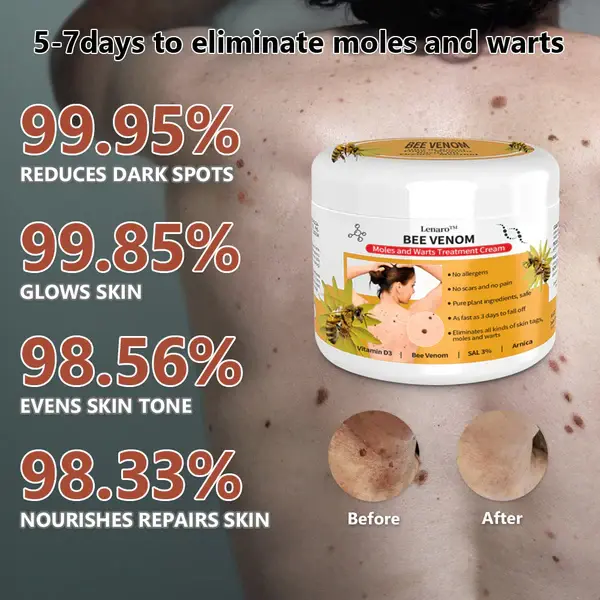
1. Fake before-and-after photos
The transformation images used in product ads are not original to Lenaro. Reverse image searches show the exact same photos have been reused by multiple other skin care brands, and many were originally taken from surgical treatment websites. They are not real results from using this cream.
2. Non-functional websites and suspicious domain history
The three main sites selling the product share multiple suspicious traits:
They prevent right-clicking and image saving, making it harder for buyers to perform reverse image searches on the before/after photos
All domains were registered very recently with little to no established reputation
The brands have no meaningful official social media presence
3. Fake 30-day money-back guarantee
While the sales pages promise a full 30-day refund for unsatisfied customers, numerous past buyer reports indicate that returns are effectively impossible. After payment and delivery, the stores typically stop responding to customer emails and support requests.
4. Bait-and-switch and unauthorized charges
Multiple customer complaints describe receiving an inferior, generic product that does not match the advertised Lenaro branding. There are also reports of unauthorized additional charges on credit cards, and automatic enrollment in hidden monthly VIP subscription programs for unrelated products such as health magazines or supplement pills.
5. Scripted positive reviews
The 5-star customer reviews displayed on the product sales pages appear to be fabricated. Independent buyer feedback posted elsewhere is almost universally negative, citing lack of results, skin irritation and poor customer service.
Ingredients and Potential Side Effects
According to product labeling, the formula includes:
Bee venom
Salicylic acid
Tea tree oil
Borneol
Arborvitae leaf extract
Of these ingredients, salicylic acid is the only one with established keratolytic (skin-exfoliating) properties used in wart treatment. However, at the concentrations commonly found in these unregulated products, it carries significant risks:
Skin irritation, burning and redness at the application site
Scarring and permanent skin discoloration, especially if used on moles or delicate facial skin
Damage to surrounding healthy skin around the target growth
Risk of secondary infection if the skin is broken
Delayed diagnosis of skin cancer: attempting to remove a mole at home can mask abnormal changes and delay necessary medical evaluation
Notably, the product is not approved by the FDA or any major health regulatory body for the treatment of moles, warts, seborrheic keratoses or skin tags.
What the FDA Says About At-Home Mole & Wart Removers
In a 2022 safety update, the U.S. Food and Drug Administration (FDA) explicitly advised consumers to avoid over-the-counter mole and skin tag removal products.
The FDA warned that these products carry potentially serious risks including:
Skin injuries and burns
Infections that may require antibiotic treatment
Permanent scarring and skin discoloration
Delayed diagnosis and treatment of skin cancer, which can be life-threatening
The agency stressed that there are no FDA-approved over-the-counter drugs for removing moles or skin tags.
Frequently Asked Questions
Where is Lenaro Bee Venom Mole & Wart Treatment Cream manufactured?
Despite claims of US manufacturing in NIH-registered laboratories, the product is understood to be a generic mass-produced item sold under multiple brand names across different online stores.
Does Lenaro Bee Venom Treatment actually work for mole removal?
There is no scientific evidence demonstrating that bee venom-based cream can safely and effectively remove moles, warts or skin tags. User reports of successful removal are rare and unconfirmed, while complaints of ineffectiveness and skin damage are common.
What are the side effects of using this cream?
Reported and potential side effects include skin irritation, redness, burning, permanent discoloration, scarring and secondary infection. Attempting home removal of moles also carries the risk of masking skin cancer symptoms.
Is Lenaro Mole Treatment FDA approved?
No. There are no FDA-approved over-the-counter topical medications for removing moles or skin tags. This product is not reviewed or approved by the FDA.
Final Verdict
Based on available evidence, Lenaro Bee Venom Mole and Wart Treatment Cream relies on deceptive marketing and unsubstantiated claims. It is not a safe, effective or clinically validated solution for removing moles, warts or skin tags.
The product uses a fake origin story, stolen before-and-after imagery, false discount urgency and questionable refund policies to drive sales. Its active ingredient claims lack scientific support, and it carries real risks of skin damage, scarring and delayed medical diagnosis.
Our recommendation
If you have moles, warts or skin tags you want removed, the safest and most effective approach is to consult a dermatologist. Professional evaluation ensures accurate diagnosis, proper removal and appropriate testing if needed. At-home removal products carry unnecessary risks and rarely deliver the promised results.
Medical Disclaimer: This review is for informational purposes only and does not constitute medical advice. Always consult a qualified healthcare provider for diagnosis and treatment of skin conditions.
About the Review Team
Our skin health review team independently researches and tests consumer health products to deliver unbiased, evidence-based analysis and help readers make safer purchasing decisions.