Blueland Dishwasher Tablets Review: Eco‑Friendly But How Well Do They Actually Clean?
Many households want to cut down single‑use plastic waste and switch to safer, plant‑based home‑cleaning supplies. Blueland Dishwasher Tablets markets itself as a zero‑plastic, non‑toxic solution for everyday dish‑washing. As a mom of three who runs my dishwasher 1‑2 times every single day, I ordered a 60‑count pack from Amazon to complete a real‑life multi‑week home test.
In this honest hands‑on review, I will break down its sustainable design, safety profile, real cleaning results, conflicting user feedback, pros and cons, and better eco‑friendly alternatives worth your consideration.
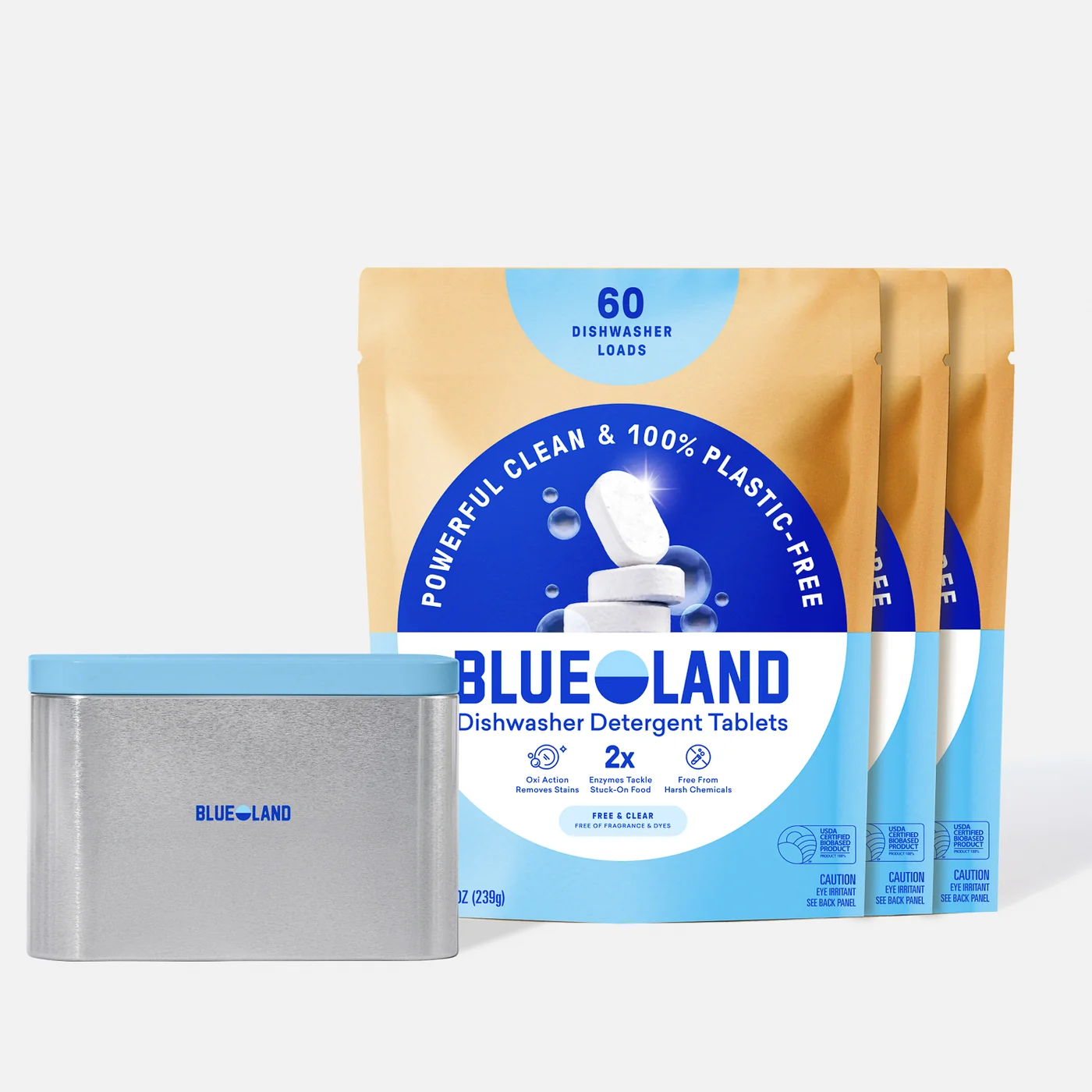
What Are Blueland Dishwasher Tablets?
Blueland builds its brand around reducing household plastic waste. Unlike most mainstream dishwasher pods wrapped in thin plastic film, these are “naked” solid tablets with no plastic coating.
The 60‑count refill pack arrives inside compostable brown kraft paper bags. You can also purchase a reusable metal forever tin for long‑term storage. You can pick either fragrance‑free or lemon‑zest scented versions.
Formulated with plant‑ and mineral‑derived ingredients, the formula excludes phosphates, parabens, chlorine bleach, dyes and phthalates. It holds EPA Safer Choice and Cradle to Cradle certifications, designed to be septic‑system safe. Brand marketing highlights upgraded double‑enzyme strength to tackle baked‑on food, coffee and tea stains.
My Real‑World Two‑Week Household Test
With three kids in our home, our dishwasher sees heavy daily use. I tested these tablets against realistic family messes: spaghetti‑sauce‑caked dinner plates, thick smoothie blender jars, greasy baking trays and everyday cutlery.
I tried multiple settings, adjusted hot‑water temperature, and experimented by adding rinse aid and running the heavy‑duty cycle. Even with these adjustments, I kept running into consistent issues.
Glasses came out cloudy. Spoons and cutlery still had gritty leftover food particles. After several cycles, an odd sour, stale smell developed inside the dishwasher. Quite a few loads required partial or full hand‑rewashing, defeating the main convenience of owning a dishwasher.
My husband also noticed the under‑par cleaning results and asked whether the appliance had actually completed its wash cycle. After two weeks of repeated testing, I stopped using Blueland and switched back to my previous dishwasher detergent.
Important note: Many online reviewers achieve great results with this same product. Differences in dishwasher hardware, local water hardness, pre‑scraping habits and rinse‑aid usage create very different end‑results for different households.
Are Blueland Dishwasher Tablets Safe For Homes?
Yes. Blueland dishwasher tablets check many boxes for family‑friendly cleaning products:
✅ No chlorine bleach, no phosphates, no parabens
✅ Non‑toxic plant‑mineral formula
✅ Fragrance‑free option available for sensitive households
✅ Safe around curious toddlers and pets (still keep detergent out of children’s reach)
✅ Septic‑safe formulation
Safety is a major strength of this product. That said, gentle, non‑harsh ingredients do not automatically equal powerful cleaning for heavy‑duty messes. Safe does not always mean tough on baked‑on grease and food residue.
Pros & Cons
Pros
✅ Zero‑plastic tablet design, compostable paper packaging; drastically cuts single‑use plastic waste
✅ Non‑toxic, clean ingredient list, kid‑pet‑safe
✅ Compact paper packaging saves kitchen cabinet storage space
✅ Fragrance‑free variant for people sensitive to artificial scents
✅ Independent eco‑safety certifications including EPA Safer Choice
Cons
❌ Struggles with heavy, baked‑on food soils in my family‑kitchen testing
❌ Frequently left cloudy film on drinking glasses and food residue on cutlery
❌ Can create unpleasant sour odors inside the dishwasher after repeated cycles
❌ Higher per‑tablet cost compared to mass‑market conventional dishwasher detergent
❌ Some users report gunky, clogged dishwasher filter buildup over time
❌ Cleaning performance varies widely depending on water quality and dishwasher setup
Mixed Community User Feedback Explained
When researching real‑user reviews, I saw extremely split opinions, which is worth calling out:
Positive reviewers: Many people get sparkling clean dishes. A key tip from happy customers: scrape large food chunks off dishes but skip heavy pre‑rinsing. Blueland’s built‑in enzymes need trace food particles to activate properly. Several satisfied users also stop adding rinse aid entirely, per brand guidance. Some shoppers find good prices for refills at Costco.
Negative reviewers: Just like my own test, many report cloudiness, leftover food gunk, bad odors and dirty dishwasher filters. This tends to happen on older dishwashers, in hard‑water locations, or when heavily soiled cookware goes in without scraping large food debris.
There is no universal outcome. It can work wonderfully for some homes and underperform for others.
Top Eco‑Friendly Alternatives
If you want plastic‑conscious, plant‑based dishwasher detergent with stronger cleaning power for tough family messes:
Seventh Generation Dishwasher Detergent Packs: Plant‑based formula, widely available on Amazon, delivers reliable cleaning for everyday household loads.
Ecover Automatic Dishwasher Tablets: Well‑regarded eco‑friendly option, performs reasonably even within hard‑water conditions.
Shopping tip: Double‑check product listings before purchasing. Some eco‑brands still use PVA plastic film around their pods. Read packaging carefully if your priority is zero‑plastic.
Frequently Asked Questions
Q: Are Blueland dishwasher tablets completely plastic‑free?
A: Yes. The tablets themselves have no plastic wrapping. Refills are packed in compostable kraft‑paper bags. You can buy a reusable metal tin for long‑term storage.
Q: Do I still need rinse‑aid when I use Blueland?
A: Official brand guidance states rinse‑aid is unnecessary for their formula. However, some users in hard‑water areas still add rinse‑aid to fight glass clouding, while others see worse results with rinse‑aid turned on. It requires trial‑and‑error for your specific home.
Q: Will Blueland work in hard‑water regions?
A: It can, but hard water may increase cloudiness on glassware. You may need to adjust dishwasher settings or clean your filter more frequently.
Q: Why do some people get great results while others do not?
A: Performance depends on dishwasher age and model, local water hardness, how thoroughly you scrape food scraps, and rinse‑aid settings. It is not a one‑size‑fits‑all product.
Q: Can Blueland tablets clog my dishwasher filter?
A: Multiple consumers report sticky gunk accumulating inside filters. Regular monthly filter maintenance is recommended, more frequently if you run the dishwasher multiple times per day.
Final Verdict
I really wanted Blueland Dishwasher Tablets to deliver on its eco‑friendly promise. The sustainability credentials and safe ingredient list are genuinely impressive. If you prioritize cutting plastic waste and mostly deal with lightly soiled dishes, this product could fit your household perfectly.
For my busy family home with heavy baked‑on food messes, its cleaning performance fell short. Cloudy glassware, leftover food grit and unwanted dishwasher odors meant I had to go back to my old detergent.
If you intend to buy Blueland, go in with realistic expectations. Be prepared to tweak your dishwasher habits: scrape large food chunks, test rinse‑aid on/off, and keep up‑with regular filter cleaning. It works amazing for some people, yet it is not the ideal pick for every household.
My Rating: 3.0 / 5 Stars
Disclaimer: This is my independent personal hands‑on household test. Results differ across dishwashers, water quality and individual usage habits. This article contains affiliate links.